LASER CUTTING

Fixture design for 3D five-axis laser cutting of a hot-formed automotive part

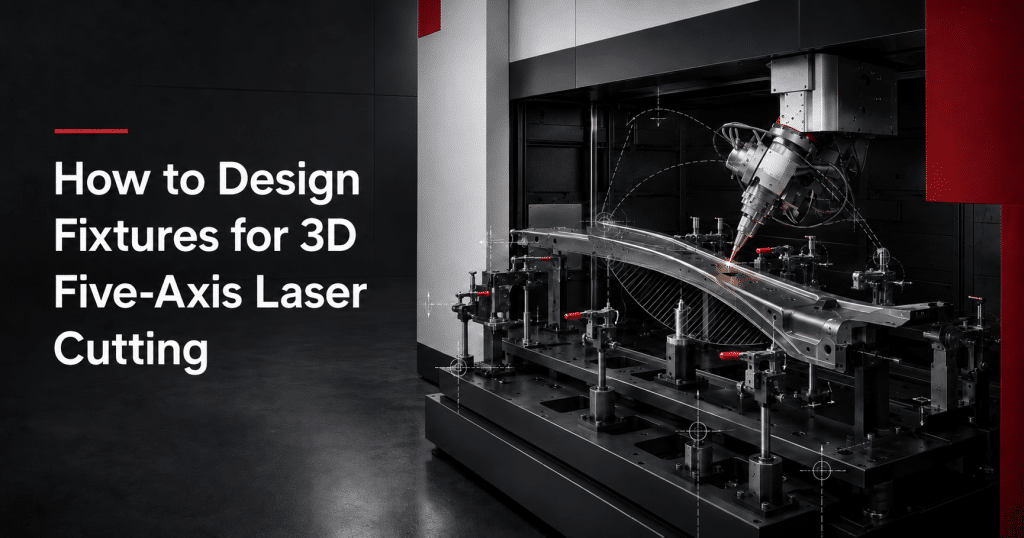
How to Design Fixtures for 3D Five-Axis Laser Cutting

A high-precision five-axis laser cutting machine does not automatically produce an accurate finished component. The machine can follow the programmed path correctly while the final trim line or hole position is still wrong if the workpiece is: For this reason, fixture design is a fundamental part of a 3D laser cutting project. This is particularly […]

How to Design Fixtures for 3D Five-Axis Laser Cutting Read More »

3D five-axis laser cutting accuracy for a hot-formed automotive part

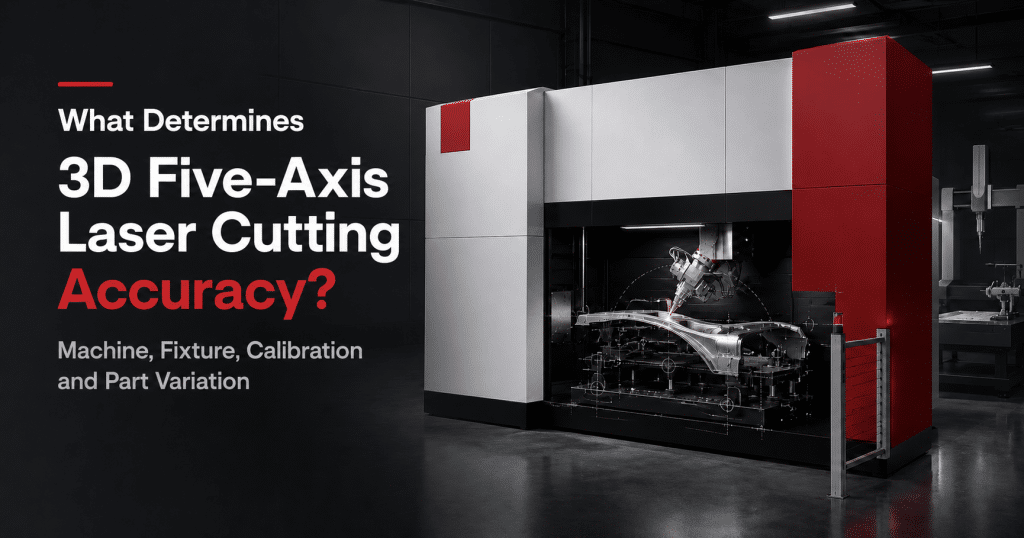
What Determines 3D Five-Axis Laser Cutting Accuracy? Machine, Fixture, Calibration and Part Variation

Accuracy is one of the first specifications buyers compare when evaluating a 3D five-axis laser cutting machine. A specification sheet may list: These values are important. But they do not tell you directly whether a hole on a hot-formed B-pillar, a trim line around a curved component or an angled slot on a hydroformed tube

What Determines 3D Five-Axis Laser Cutting Accuracy? Machine, Fixture, Calibration and Part Variation Read More »

Five-axis laser cutting machine versus robotic laser cutting system for complex 3D metal parts

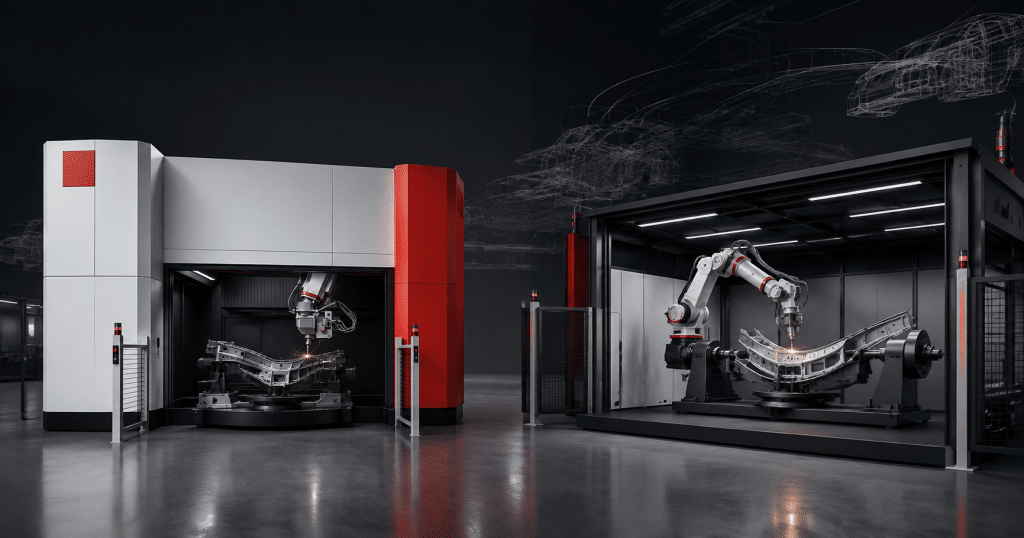
Five-Axis Laser Cutting vs Robotic Laser Cutting: Which System Fits Your 3D Parts?

When a metal component cannot be processed on a conventional flatbed laser cutter, manufacturers often face two possible solutions: Both can move the laser cutting head around complex three-dimensional parts. Both can process curved surfaces, formed components, holes, contours and multi-angle features. And both can be integrated into automated manufacturing cells. However, they achieve this

Five-Axis Laser Cutting vs Robotic Laser Cutting: Which System Fits Your 3D Parts? Read More »

Laser Cutting vs Plasma Cutting Which Is Better

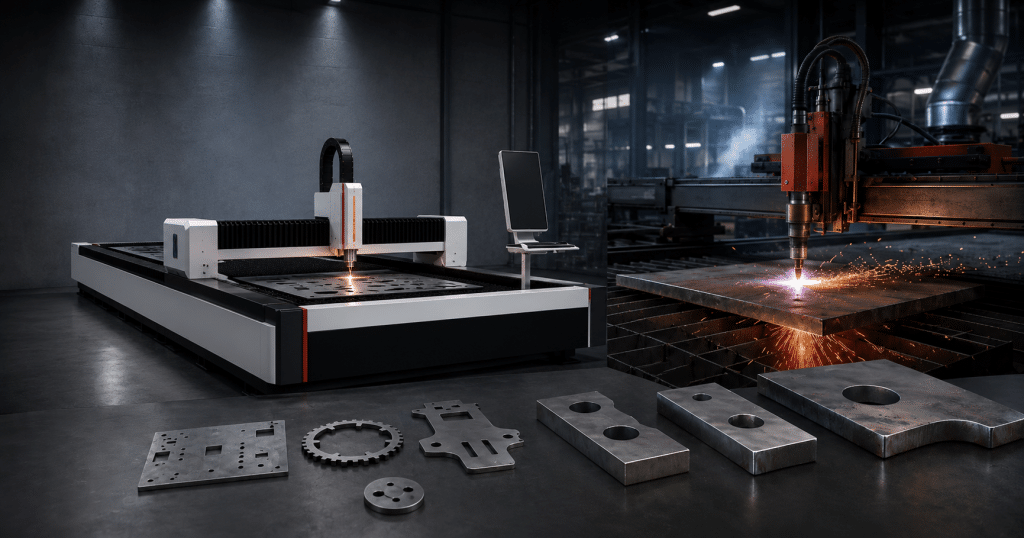
Laser Cutting Machine vs Plasma Cutting: Which Process Should You Choose?

Laser cutting and plasma cutting are two of the most widely used thermal cutting technologies in metal fabrication. Both can process carbon steel, stainless steel and aluminum. Both can be integrated with CNC tables, automatic nesting, material handling and production software. And both can achieve high productivity when the equipment is matched correctly to the

Laser Cutting Machine vs Plasma Cutting: Which Process Should You Choose? Read More »

How to Choose a Tube Laser Cutting Machine

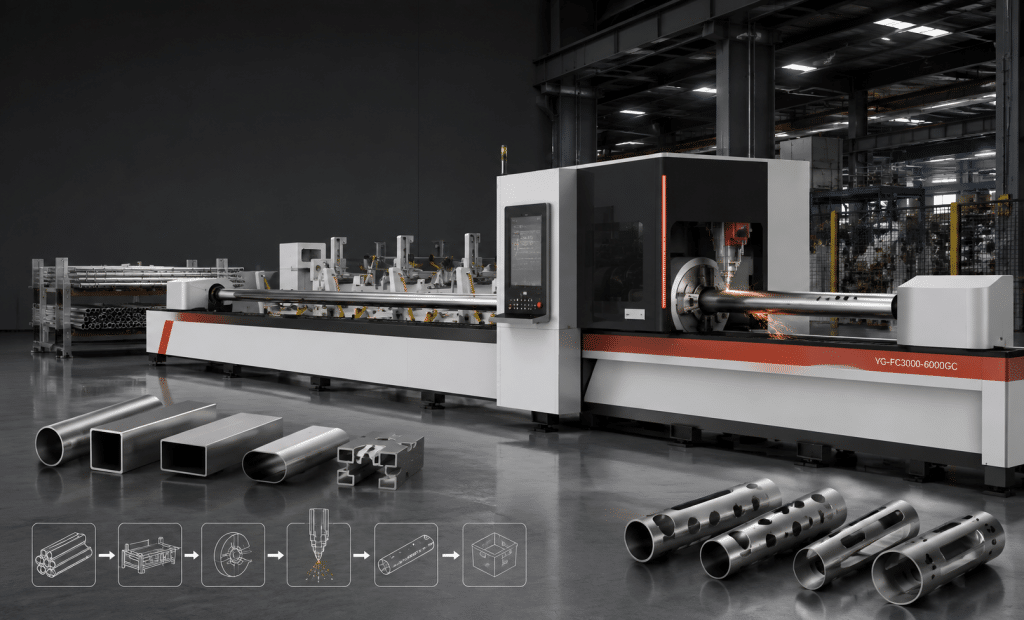
How to Choose a Tube Laser Cutting Machine: Tube Size, Chuck, Loading and Cutting Capability

A tube laser cutting machine can replace several conventional operations by cutting profiles to length while also producing holes, slots, notches, joint features and complex contours in one programmed process. However, choosing the right tube laser is not as simple as comparing laser power or maximum tube diameter. Two machines may both be described as

How to Choose a Tube Laser Cutting Machine: Tube Size, Chuck, Loading and Cutting Capability Read More »

How assist gas removes molten metal during laser cutting

Laser Cutting Assist Gas: Oxygen vs Nitrogen vs Compressed Air

Laser power is only one part of a successful laser cutting process. The gas delivered through the cutting nozzle also plays a major role in determining whether molten material can be removed from the kerf, whether the cutting edge oxidizes, how stable the process remains and how much the finished part will cost to produce.

Laser Cutting Assist Gas: Oxygen vs Nitrogen vs Compressed Air Read More »

S-Auto Series

Laser Trimming of Hot-Formed Automotive Parts: Process, Equipment and Applications

Hot-formed automotive parts combine complex three-dimensional geometry with high material strength. After forming and hardening, many components still require final trimming, hole cutting, slotting or contour correction before they can enter welding and body-in-white assembly. Conventional flatbed laser cutting machines are designed for two-dimensional sheet metal and cannot maintain the required cutting-head orientation around a

Laser Trimming of Hot-Formed Automotive Parts: Process, Equipment and Applications Read More »

What is laser cutting process machine types materials and industrial applications

What Is Laser Cutting? Process, Machine Types, Materials and Industrial Applications

Laser cutting is one of the most widely used processes in modern manufacturing. It is used to produce sheet metal parts, tubes, structural profiles, automotive components, machinery parts, enclosures and many other products. However, the term “laser cutting” can refer to several different technologies. A flatbed fiber laser cutting machine, a tube laser cutter, a

What Is Laser Cutting? Process, Machine Types, Materials and Industrial Applications Read More »

How to choose a fiber laser cutting machine for industrial sheet metal production

How to Choose a Fiber Laser Cutting Machine: Power, Table Size, Configuration and Cost

Choosing a fiber laser cutting machine can be difficult because machines with similar table sizes and laser power may deliver very different results in real production. A quotation may highlight laser power, maximum cutting thickness and machine speed. However, these specifications do not fully explain whether the system can process your typical materials efficiently, maintain

How to Choose a Fiber Laser Cutting Machine: Power, Table Size, Configuration and Cost Read More »

S-Auto Series

How to Evaluate an Industrial Laser Cutting Machine: A Buyer’s Guide Beyond Price and Power

When manufacturers begin comparing laser cutting machines, the first two questions are usually: Both questions matter, but neither is enough to determine whether a machine will be suitable for your production. Two laser cutting machines with similar power ratings can perform very differently when processing real parts. Machine architecture, motion control, workholding, software, automation, service

How to Evaluate an Industrial Laser Cutting Machine: A Buyer’s Guide Beyond Price and Power Read More »