Acilly Xiong

Acilly Xiong
How to cut thick steel plate with a fiber laser using oxygen nitrogen and controlled piercing

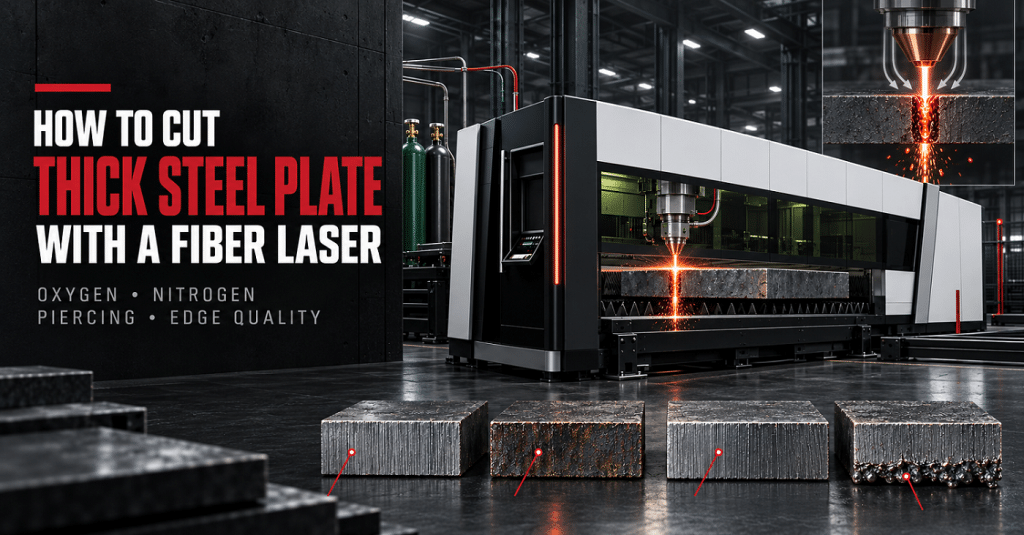
How to Cut Thick Steel Plate With a Fiber Laser: Oxygen, Nitrogen, Piercing and Edge Quality

Cutting thick steel plate with a fiber laser is not simply a bigger version of cutting thin sheet. As material thickness increases, the cutting process becomes more sensitive to: This is why thick-plate cutting often determines whether a high-power fiber laser system becomes a productive long-term asset or a machine that looks impressive on paper

How to Cut Thick Steel Plate With a Fiber Laser: Oxygen, Nitrogen, Piercing and Edge Quality Read More »

High-power fiber laser cutting machine with heavy-duty bed, exchange table, assist gas and automation

How to Choose a High-Power Fiber Laser Cutting Machine for Thick Plate: Power, Bed, Exchange Table, Gas and Automation

High-power fiber laser cutting has expanded the range of sheet and plate work that can be processed with laser technology. Modern systems are available with substantially more laser power than earlier generations, allowing manufacturers to increase productivity across suitable thin, medium and thick materials. But higher power also introduces new questions. A buyer evaluating a

How to Choose a High-Power Fiber Laser Cutting Machine for Thick Plate: Power, Bed, Exchange Table, Gas and Automation Read More »

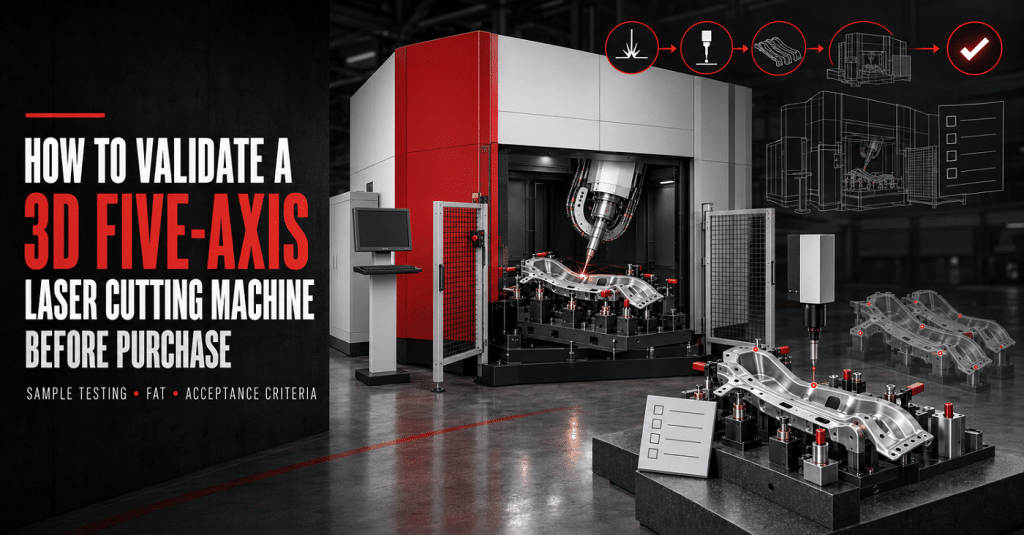
Validation of a 3D five-axis laser cutting machine through sample testing, FAT and acceptance inspection

How to Validate a 3D Five-Axis Laser Cutting Machine Before Purchase: Sample Testing, FAT and Acceptance Criteria

A 3D five-axis laser cutting machine can look impressive in a brochure. The specification may show: But none of these specifications alone proves that the machine can repeatedly process your actual part to the required quality and cycle time. For complex applications such as: the most useful validation method is to move from specifications to

How to Validate a 3D Five-Axis Laser Cutting Machine Before Purchase: Sample Testing, FAT and Acceptance Criteria Read More »

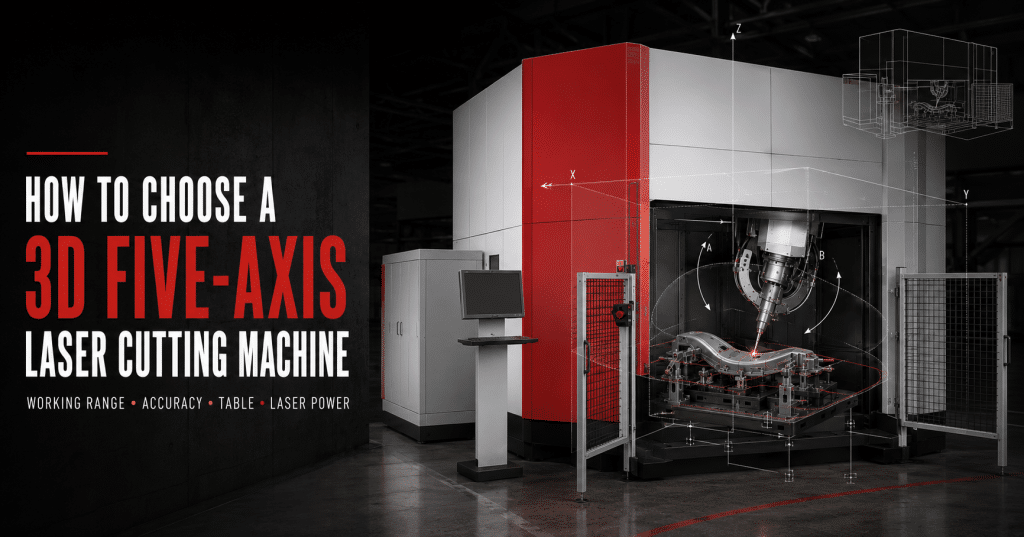
How to choose a 3D five-axis laser cutting machine by working range accuracy table and laser power

How to Choose a 3D Five-Axis Laser Cutting Machine: Working Range, Accuracy, Table and Laser Power

Choosing a 3D five-axis laser cutting machine is fundamentally different from choosing a conventional flatbed laser cutter. For flat sheet, buyers often begin with relatively straightforward questions: For a three-dimensional formed component, those questions are only the beginning. The cutting head may need to: This means the correct machine depends on the complete relationship between:

How to Choose a 3D Five-Axis Laser Cutting Machine: Working Range, Accuracy, Table and Laser Power Read More »

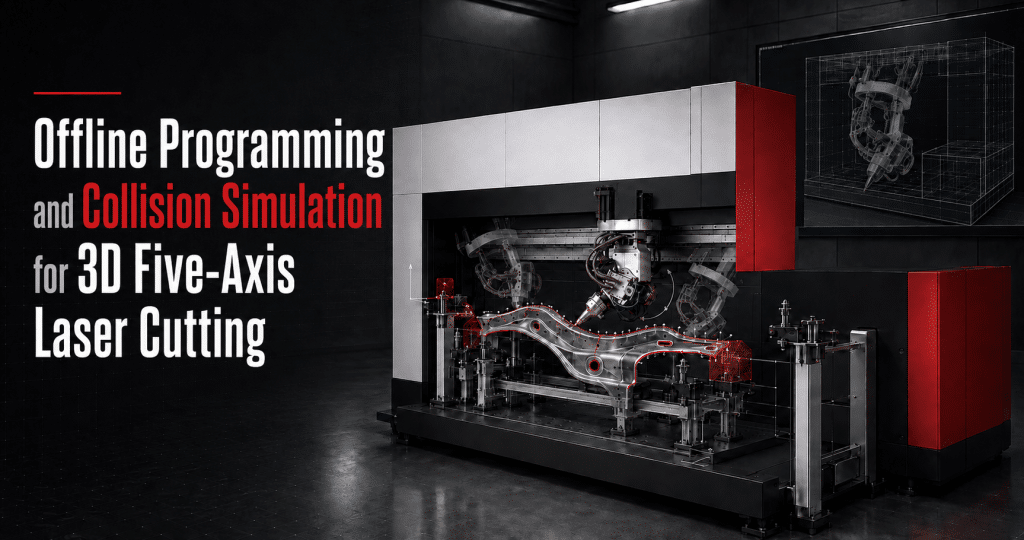
Offline programming and collision simulation for 3D five-axis laser cutting

Offline Programming and Collision Simulation for 3D Five-Axis Laser Cutting

Programming a conventional flat-sheet laser cutter is relatively straightforward. The workpiece is flat. The cutting head normally remains perpendicular to the sheet. And most cutting paths exist in a two-dimensional X-Y plane. A 3D five-axis laser cutting machine creates a very different programming problem. The cutting head may need to: At the same time, the

Offline Programming and Collision Simulation for 3D Five-Axis Laser Cutting Read More »

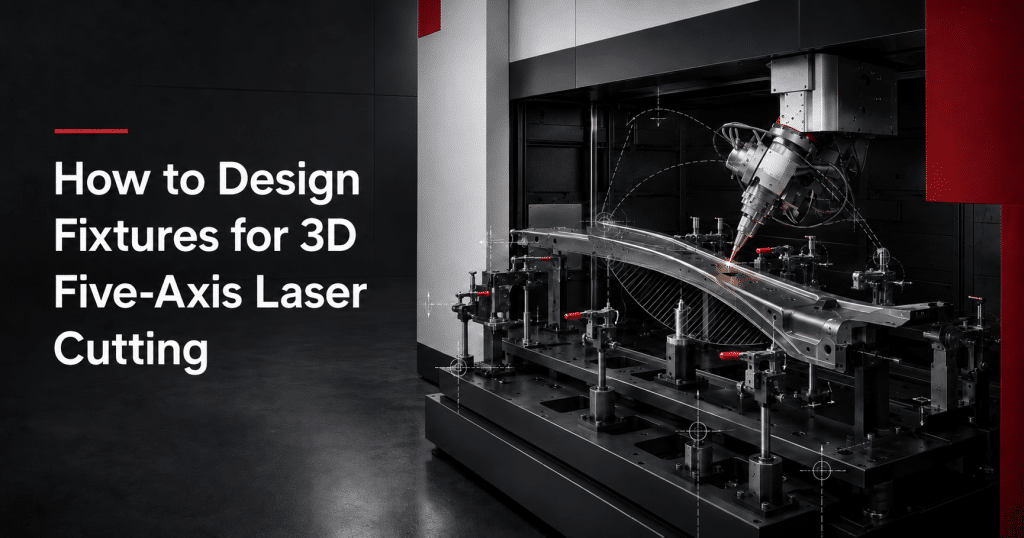
Fixture design for 3D five-axis laser cutting of a hot-formed automotive part

How to Design Fixtures for 3D Five-Axis Laser Cutting

A high-precision five-axis laser cutting machine does not automatically produce an accurate finished component. The machine can follow the programmed path correctly while the final trim line or hole position is still wrong if the workpiece is: For this reason, fixture design is a fundamental part of a 3D laser cutting project. This is particularly

How to Design Fixtures for 3D Five-Axis Laser Cutting Read More »

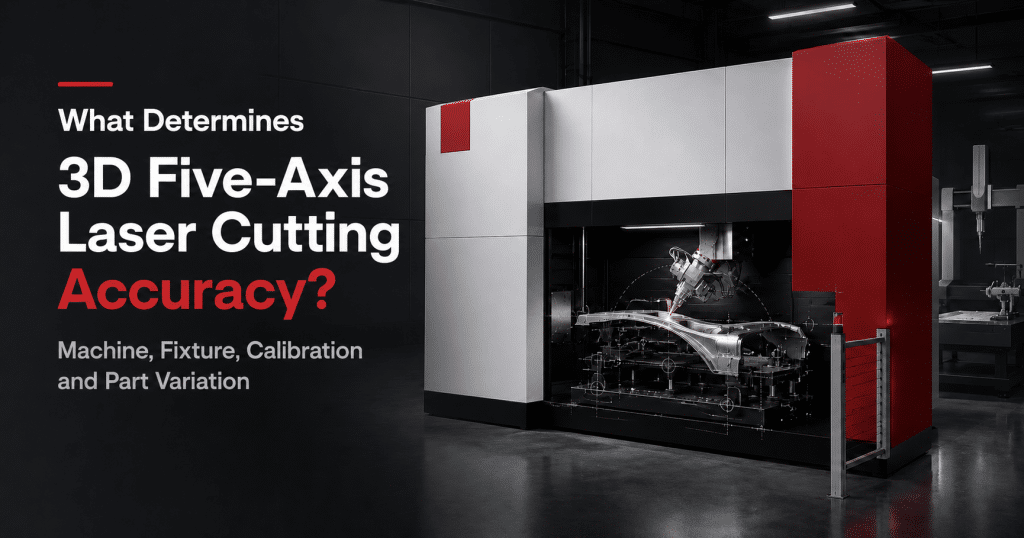
3D five-axis laser cutting accuracy for a hot-formed automotive part

What Determines 3D Five-Axis Laser Cutting Accuracy? Machine, Fixture, Calibration and Part Variation

Accuracy is one of the first specifications buyers compare when evaluating a 3D five-axis laser cutting machine. A specification sheet may list: These values are important. But they do not tell you directly whether a hole on a hot-formed B-pillar, a trim line around a curved component or an angled slot on a hydroformed tube

What Determines 3D Five-Axis Laser Cutting Accuracy? Machine, Fixture, Calibration and Part Variation Read More »

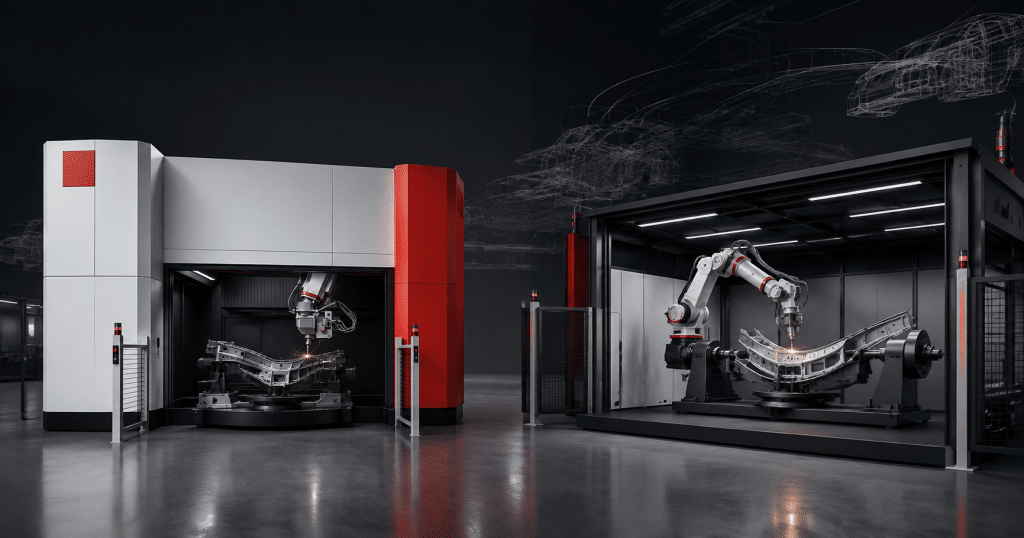
Five-axis laser cutting machine versus robotic laser cutting system for complex 3D metal parts

Five-Axis Laser Cutting vs Robotic Laser Cutting: Which System Fits Your 3D Parts?

When a metal component cannot be processed on a conventional flatbed laser cutter, manufacturers often face two possible solutions: Both can move the laser cutting head around complex three-dimensional parts. Both can process curved surfaces, formed components, holes, contours and multi-angle features. And both can be integrated into automated manufacturing cells. However, they achieve this

Five-Axis Laser Cutting vs Robotic Laser Cutting: Which System Fits Your 3D Parts? Read More »

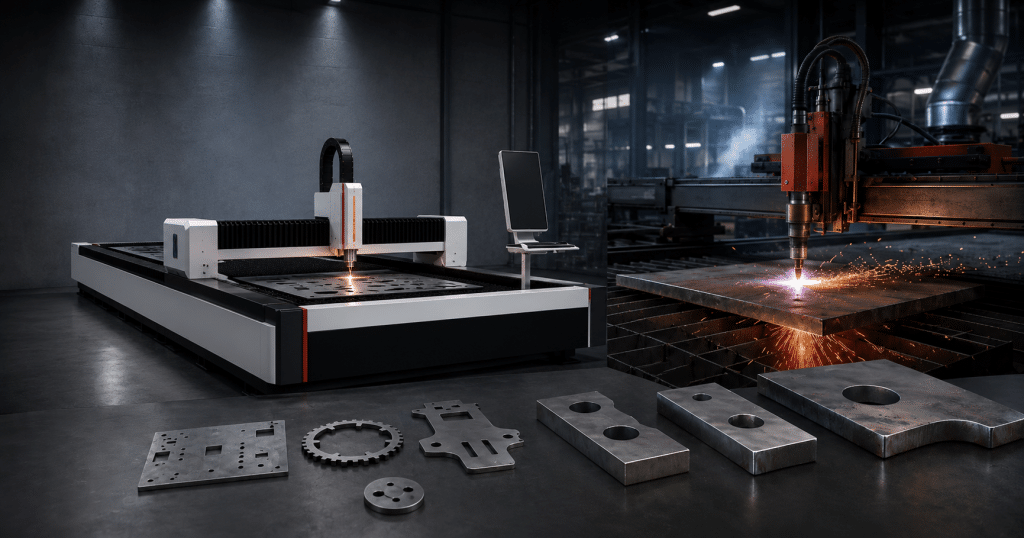
Laser Cutting vs Plasma Cutting Which Is Better

Laser Cutting Machine vs Plasma Cutting: Which Process Should You Choose?

Laser cutting and plasma cutting are two of the most widely used thermal cutting technologies in metal fabrication. Both can process carbon steel, stainless steel and aluminum. Both can be integrated with CNC tables, automatic nesting, material handling and production software. And both can achieve high productivity when the equipment is matched correctly to the

Laser Cutting Machine vs Plasma Cutting: Which Process Should You Choose? Read More »

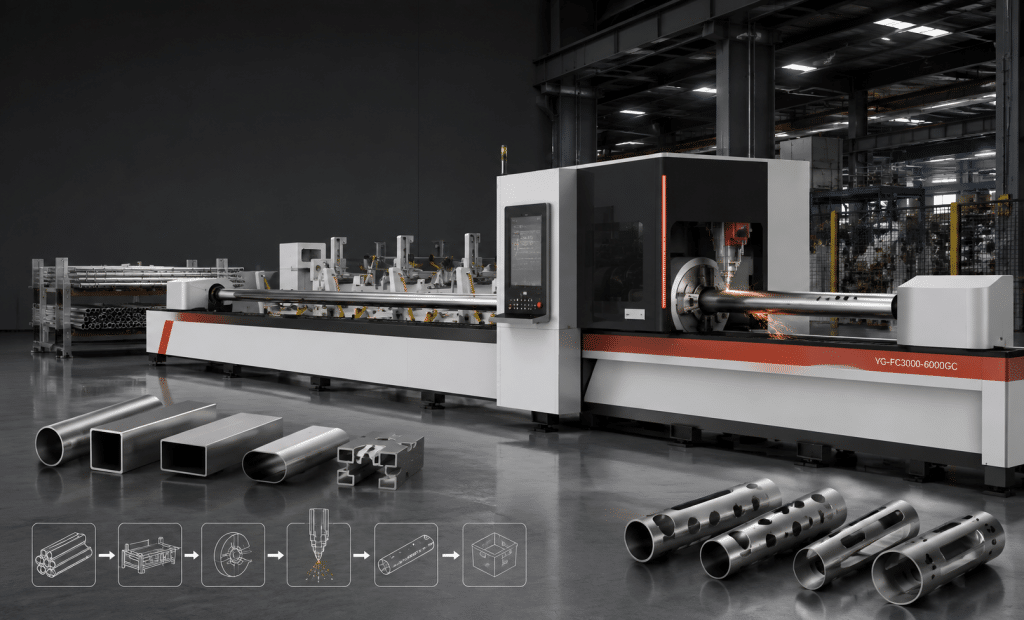
How to Choose a Tube Laser Cutting Machine

How to Choose a Tube Laser Cutting Machine: Tube Size, Chuck, Loading and Cutting Capability

A tube laser cutting machine can replace several conventional operations by cutting profiles to length while also producing holes, slots, notches, joint features and complex contours in one programmed process. However, choosing the right tube laser is not as simple as comparing laser power or maximum tube diameter. Two machines may both be described as

How to Choose a Tube Laser Cutting Machine: Tube Size, Chuck, Loading and Cutting Capability Read More »