
Air-cooled · 4-in-1 processing
Handheld Laser
Welding MachineFlexible joining.
One versatile platform.
Bring the welding head to your workpiece. An air-cooled platform with 1200, 1500 and 2000 W options for metal fabrication, plus cleaning, cutting and weld seam cleaning functions.
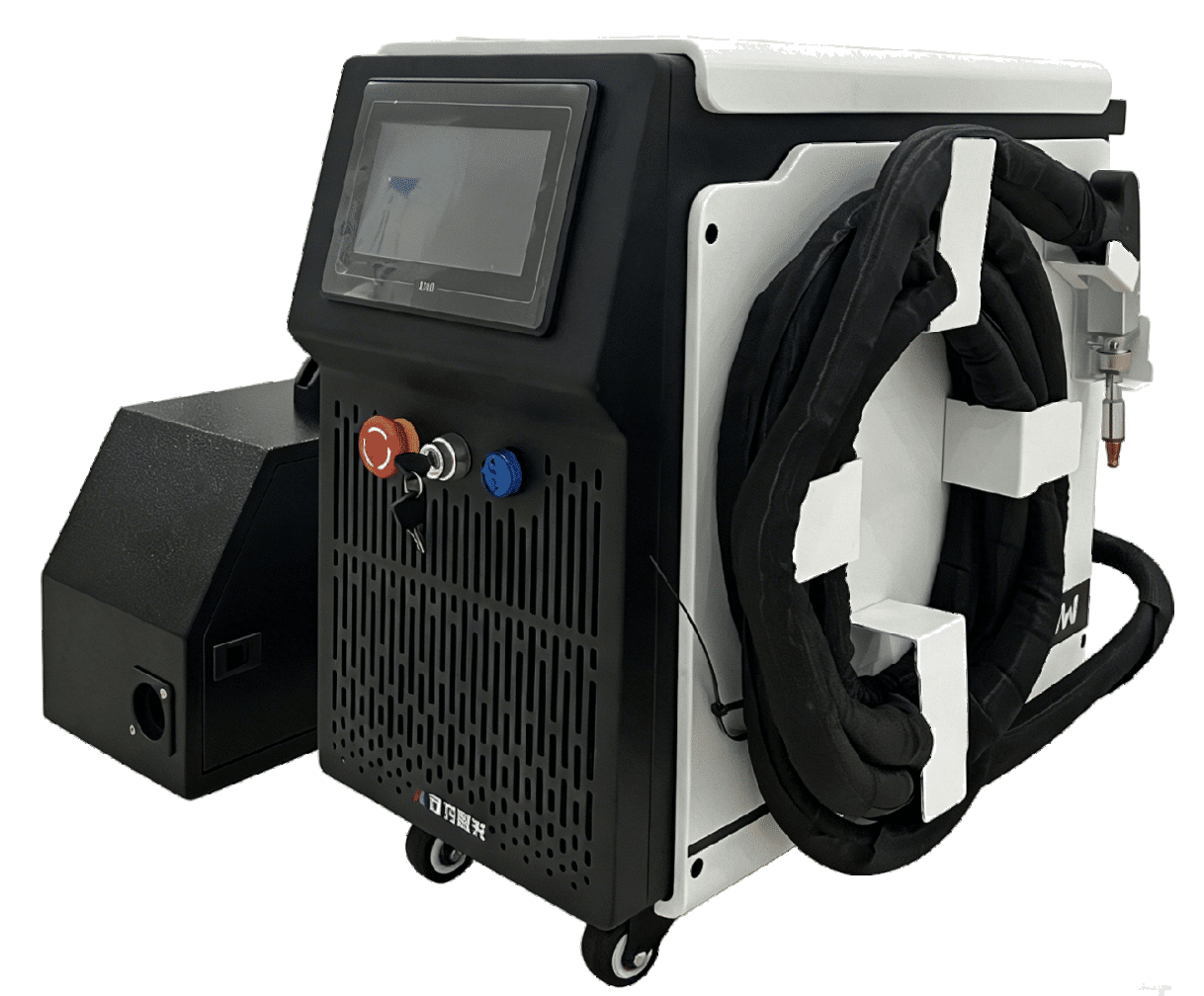
Three laser power options
Weld · Clean · Cut · Seam clean
Catalog cooling configuration
01 / Built around your weld
Move around the part.
Keep the process controlled.
For fabricators working with varied parts, a handheld head provides flexible access to seams without a dedicated motion program for every component. Review material, fit-up and joint access together to select the right power and accessories.
- Discuss stainless steel and carbon steel applications.
- Evaluate aluminum and other alloys using actual samples.
- Plan shielding gas, wire feed and workholding around the joint.
Air-cooled · Continuous operation
Air-cooled · Continuous operation
Air-cooled · Continuous operation
02 / Four functions
One platform.
More ways to work.
Each function needs the correct head setup, accessories and validated process settings.
01
Welding
Join compatible metals using a handheld head. Tune the process around material, thickness, joint gap and the required penetration.
02
Cleaning
The catalog lists a 10–150 mm cleaning scan width. Validate the substrate, contamination and finish before selecting a cleaning process.
03
Cutting
Use the supported cutting configuration for suitable tasks. Confirm material, thickness and accessory requirements before ordering.
04
Weld seam cleaning
Evaluate post-weld surface cleaning on representative seams. Cleaning appearance does not establish weld strength or internal quality.
03 / Machine details
A closer look at the system.
Original catalog photographs show the control panel, connections and cable arrangement. Confirm the final supply scope in your quotation.
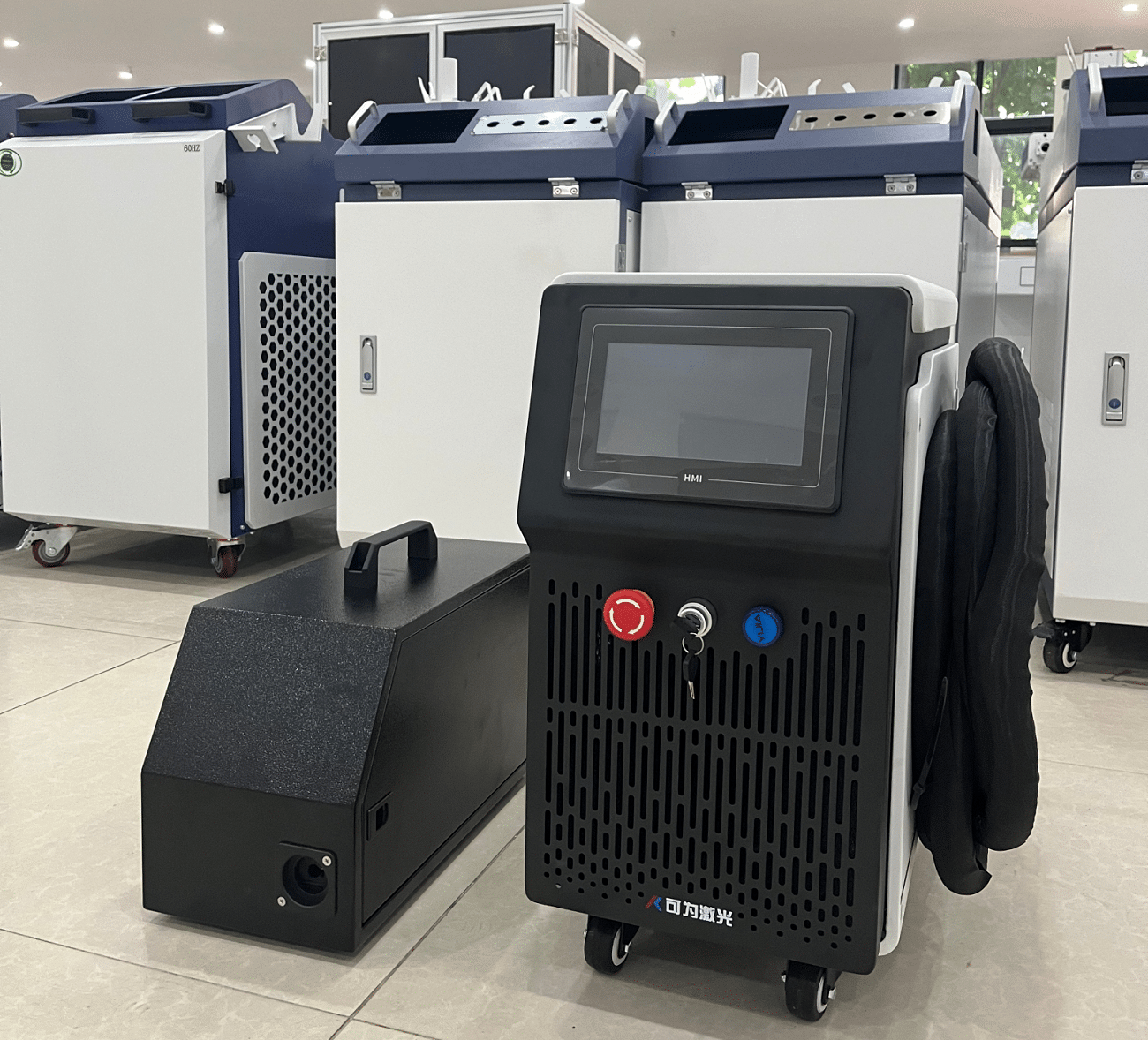
Touch-panel access
Front controls and a touch-panel interface keep process settings accessible.
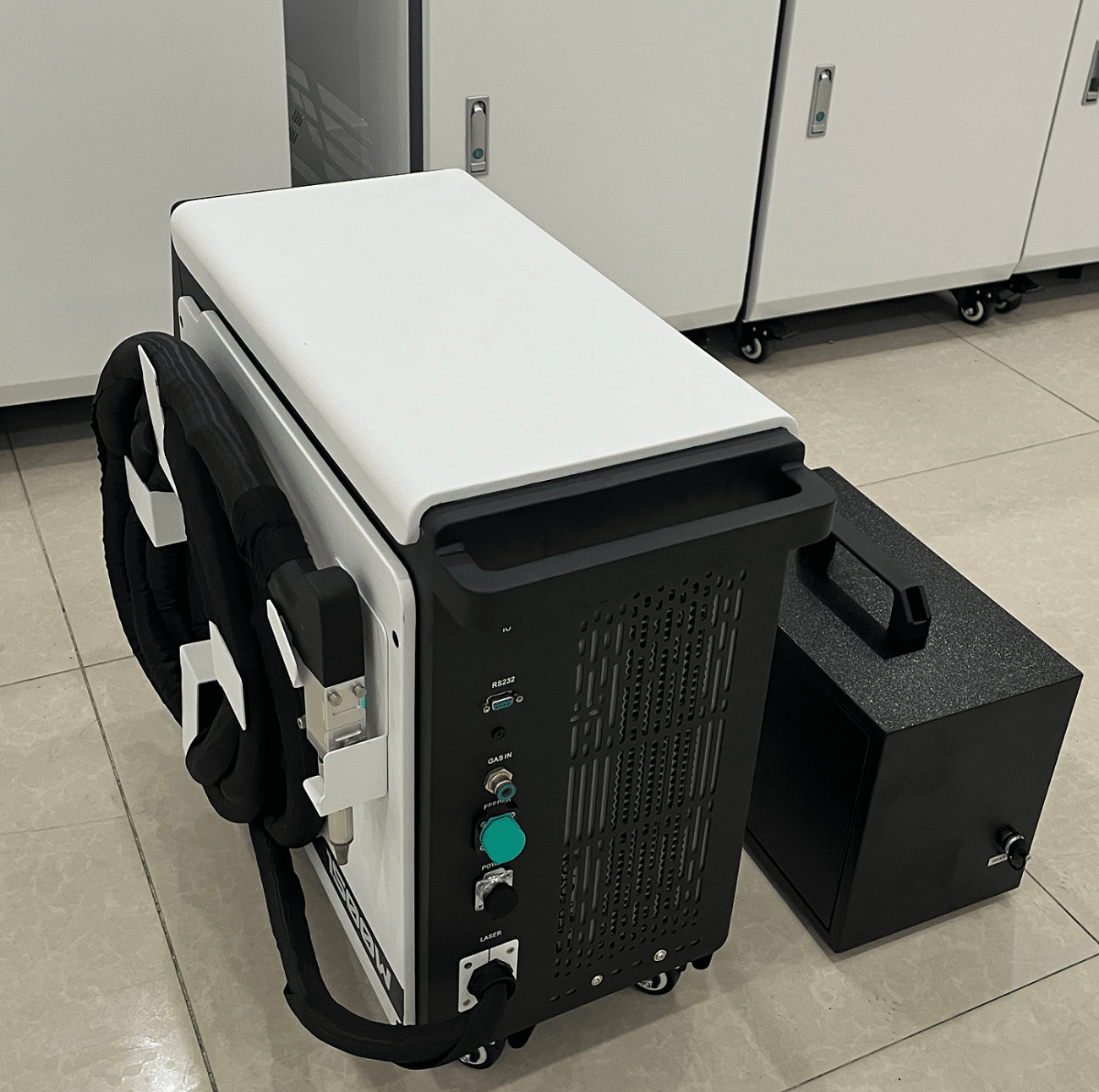
Connections and accessories
Check power, gas, wire feeder and other connections against the selected configuration.
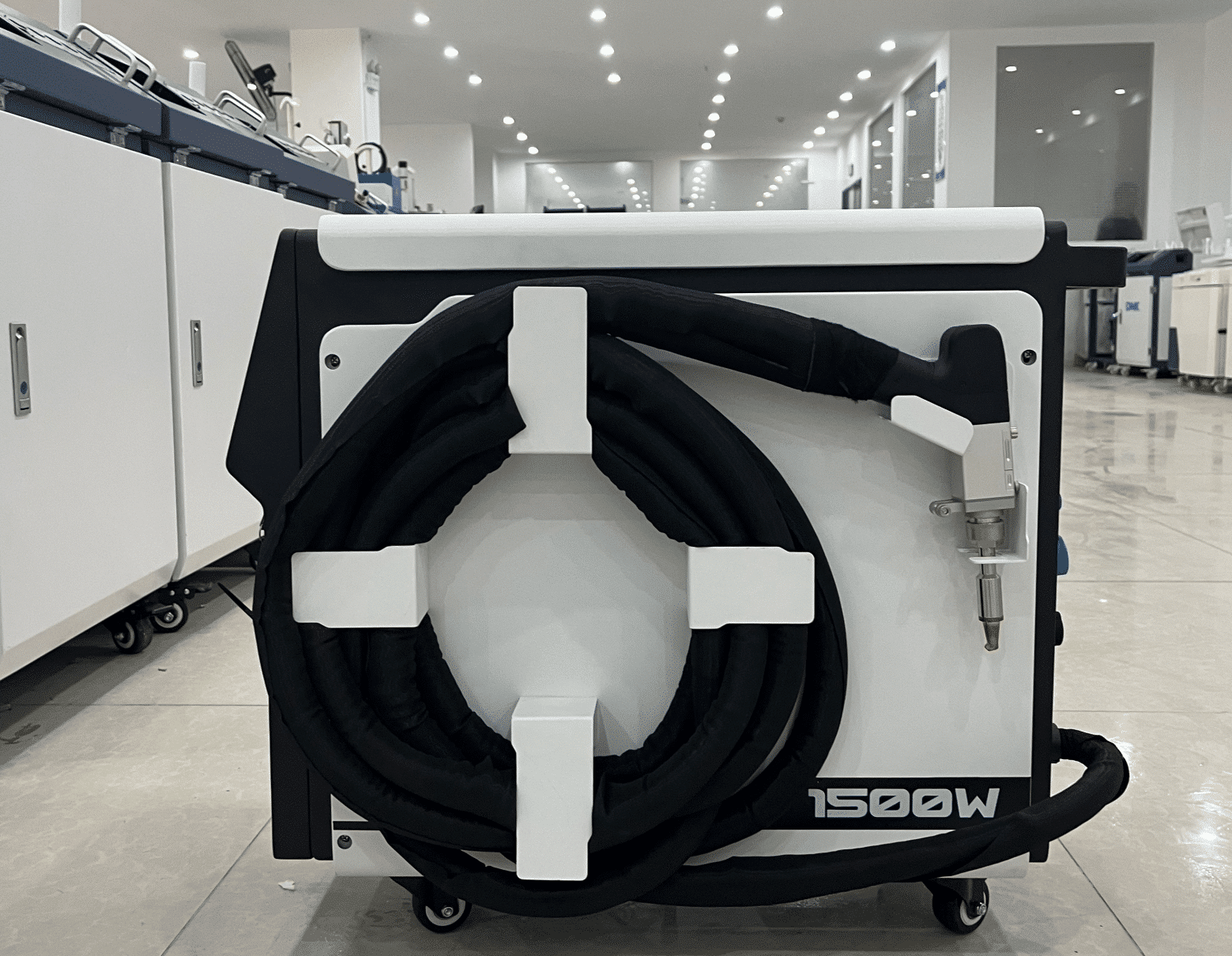
Fiber cable and torch storage
Plan the working area around the supplied fiber length, cable routing and safe access.
04 / Application review
Start with the joint.
Application suitability depends on material, geometry, access and acceptance criteria.
Sheet-metal fabrication
Panels, enclosures and cabinets where joint fit-up and seam appearance matter.
Hardware & kitchenware
Stainless assemblies and formed components with accessible weld seams.
Tubes & frames
Butt, lap, tee and corner joint concepts, evaluated with representative fixtures.
The catalog illustrates butt, lap, tee and corner joints. Joint examples are not a qualified welding procedure or a guarantee of production results.
05 / Technical specifications
Choose power around the application.
Catalog reference figures for the air-cooled handheld platform.
| Parameter | ZGH Series |
|---|---|
| Model | ZGH-1200W / ZGH-1500W / ZGH-2000W |
| Laser power options | 1200 / 1500 / 2000 W |
| Operating mode | Continuous |
| Cooling method | Air cooling |
| Laser wavelength, as listed | 1064 nm |
| Fiber length | 5–10 m; confirm supplied length |
| Welding scan width | 0.5–6 mm |
| Cleaning scan width | 10–150 mm |
| Laser energy stability | <2% |
| Welding head | Gefasst laser head |
| Controller | Gefasst touch-panel control system |
| Welding speed, catalog range | 0–120 mm/s; process-dependent |
| Steel thickness, catalog reference | ≤5 mm; not a per-power penetration guarantee |
06 / Project evaluation
From sample joint
to a defined process.
A clear trial and acceptance plan makes the equipment decision more useful.
Share the joint
Send material grade, thickness, joint sketch, gap and production target.
Select the setup
Review power, torch, nozzle, wire feeder, shielding gas and fixtures.
Validate samples
Agree on appearance, penetration and the inspection method for the actual part.
Prepare the work area
Define controlled access, laser safety, extraction and operator training before use.
07 / Common questions
Before you specify
your handheld welder.
Which power should I choose?
Start with material grade, thickness, joint geometry, fit-up and output targets. Evaluate a representative sample before choosing 1200, 1500 or 2000 W.
Does the ≤5 mm figure apply to every model?
No. The brochure gives a general steel-thickness reference without a per-power penetration matrix. Confirm the selected power, joint design and acceptance standard through sample testing.
What does 4-in-1 include?
The brochure lists welding, cleaning, cutting and weld seam cleaning. Confirm the required head setup, nozzles and other accessories for each function in the quotation.
Can aluminum or copper be welded?
Material grade, surface condition, reflectivity and joint design affect suitability. Aluminum and especially copper applications need a specific technical review; do not assume equal capability across all alloys or thicknesses.
Is a wire feeder included?
A feeder appears in the catalog photographs, but a photograph does not define the commercial supply scope. Confirm feeder type, compatible wire sizes, nozzles, gas requirements and accessories in the quotation.
What safety arrangements are required?
Use a controlled laser welding area with suitable barriers or enclosure, trained operators, wavelength-appropriate eye protection and other PPE, and fume extraction. Eye protection alone is not a substitute for beam containment and access control. Follow the machine manual and a qualified site risk assessment.
Can I replace my existing welding process directly?
Compare trials on actual parts. Review penetration, mechanical or leak-test requirements where relevant, distortion, finish, cycle and operator training before approving the new process.
08 / Tell us about your weld
Find the right setup
for your next joint.
Share your material and welding requirements. Start with a sample review and define the machine, accessories and acceptance criteria together.
- Material grade and thickness
- Joint design and fit-up
- Required quality and output
- Power, gas and working-area conditions
Request a weld review
Fields marked * are required.
Describe available drawings or samples. The team can arrange an appropriate submission method.