
Compact footprint · Full five-axis motion
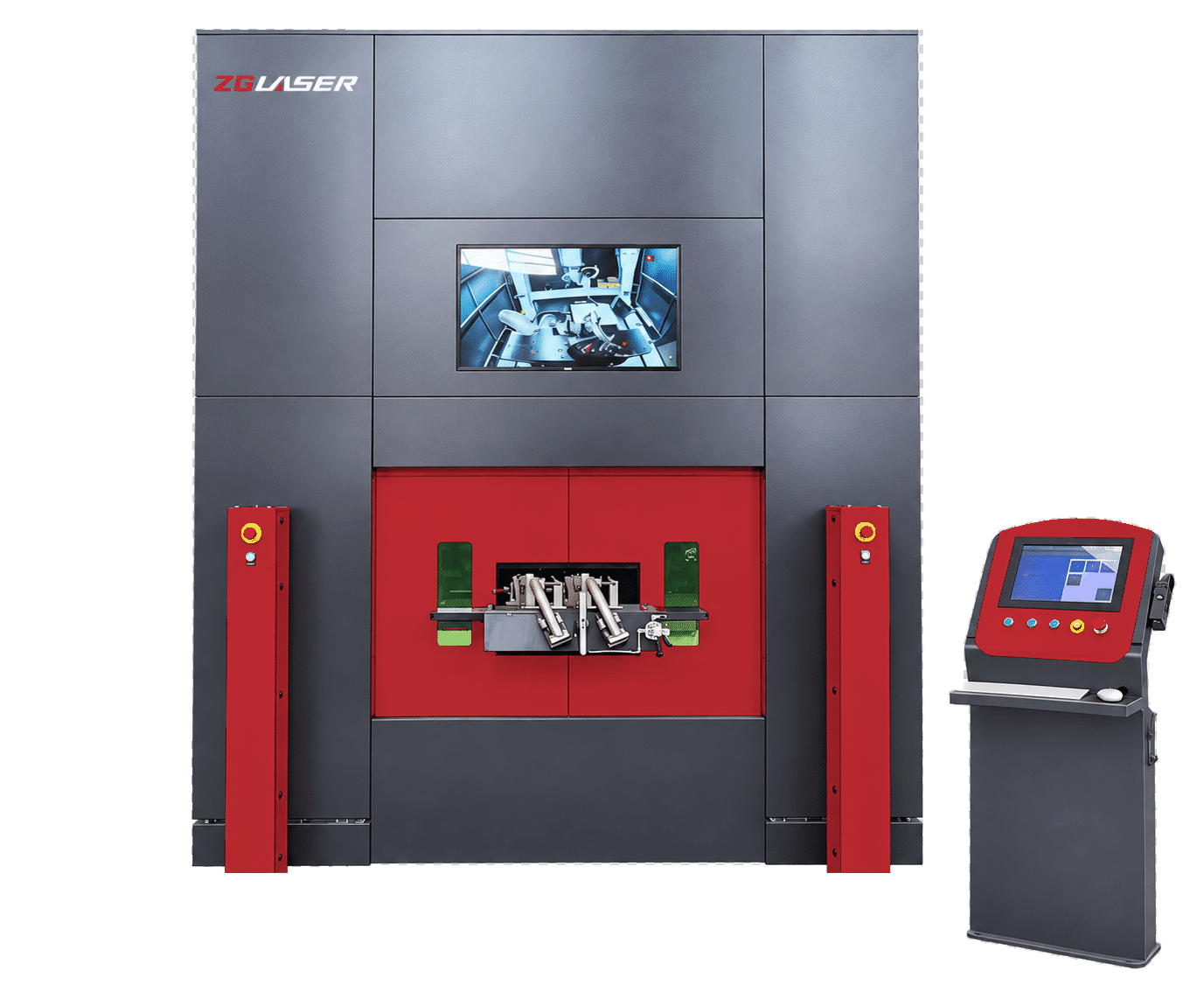
Compact 3D Five-Axis Laser Cutting Machine
A space-saving enclosed system for flexible 3D cutting, prototypes and mixed-batch production—without giving up coordinated five-axis motion.
X / Y / Z travel, mm
Max. X / Y / Z speed
A-axis / C-axis motion
01 / Compact production cell
Full five-axis capability
in a smaller footprint.
The Compact 3D Five-Axis machine brings the core processing concept of the S-Auto platform into a space-saving enclosed cell. Flexible table, power and fixture configurations help it adapt to prototypes, mixed batches and changing production layouts.
- Cut complex contours and openings on three-dimensional workpieces.
- Coordinate X/Y/Z travel with A/C rotary motion.
- Configure workholding and laser power around the actual part.
1500 × 1500 × 700 mm X / Y / Z travel
±135° A-axis · N × 360° C-axis
Axis travel is not the same as usable part size. Confirm the cutting envelope with the part, fixture, rotary-table orientation and cutting-head clearance.
02 / Machine capabilities
Compact by design.
Flexible by configuration.
Motion, workholding and programming must be evaluated together around the actual component.
Compact enclosed cell
A smaller, guarded machine layout helps integrate five-axis cutting where floor space and production-cell planning matter.
Coordinated five-axis motion
X/Y/Z travel works with A/C rotary motion to reach multi-angle contours and openings on complex workpieces.
Rotary worktable access
The catalog configuration uses a rotary worktable to present different part faces to the cutting head. Review the usable envelope around every orientation.
Flexible fixture solutions
Plan clamps, datums and support points around both part stability and cutting-head clearance. Exact fixtures remain project-specific.
Mixed-batch adaptability
Flexible table, laser-power and fixture choices support prototype work, product changes and varied batch sizes.
Process integration
Define programming, collision checks, utilities and acceptance criteria together with the final machine configuration and quotation.
03 / Machine details
Inside the compact system.
These are machine-detail photographs from the supplied product catalog—not application samples. The delivered configuration may vary by project.
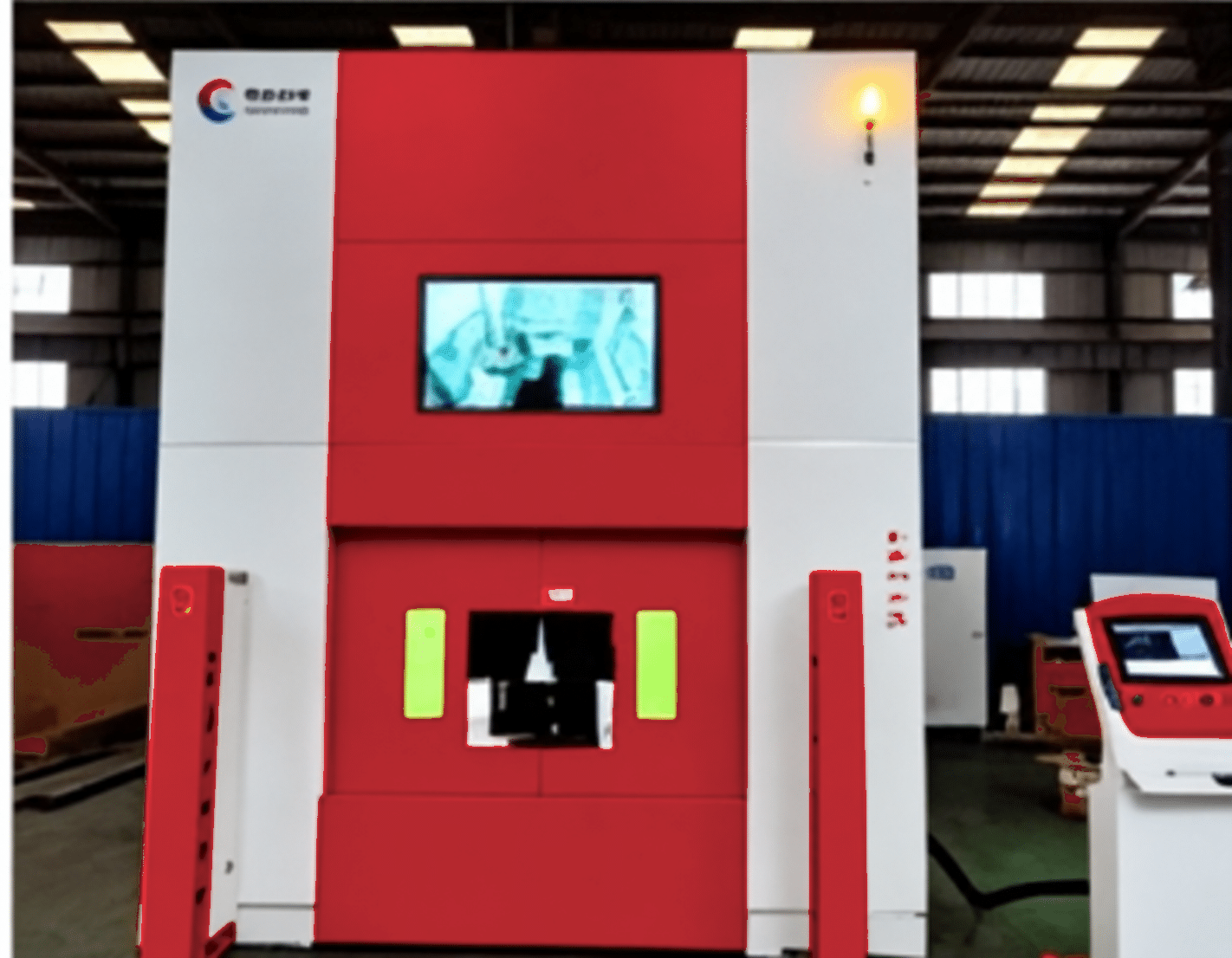
Enclosed compact system
The catalog’s secondary front view shows the guarded, space-saving machine layout and external control console.
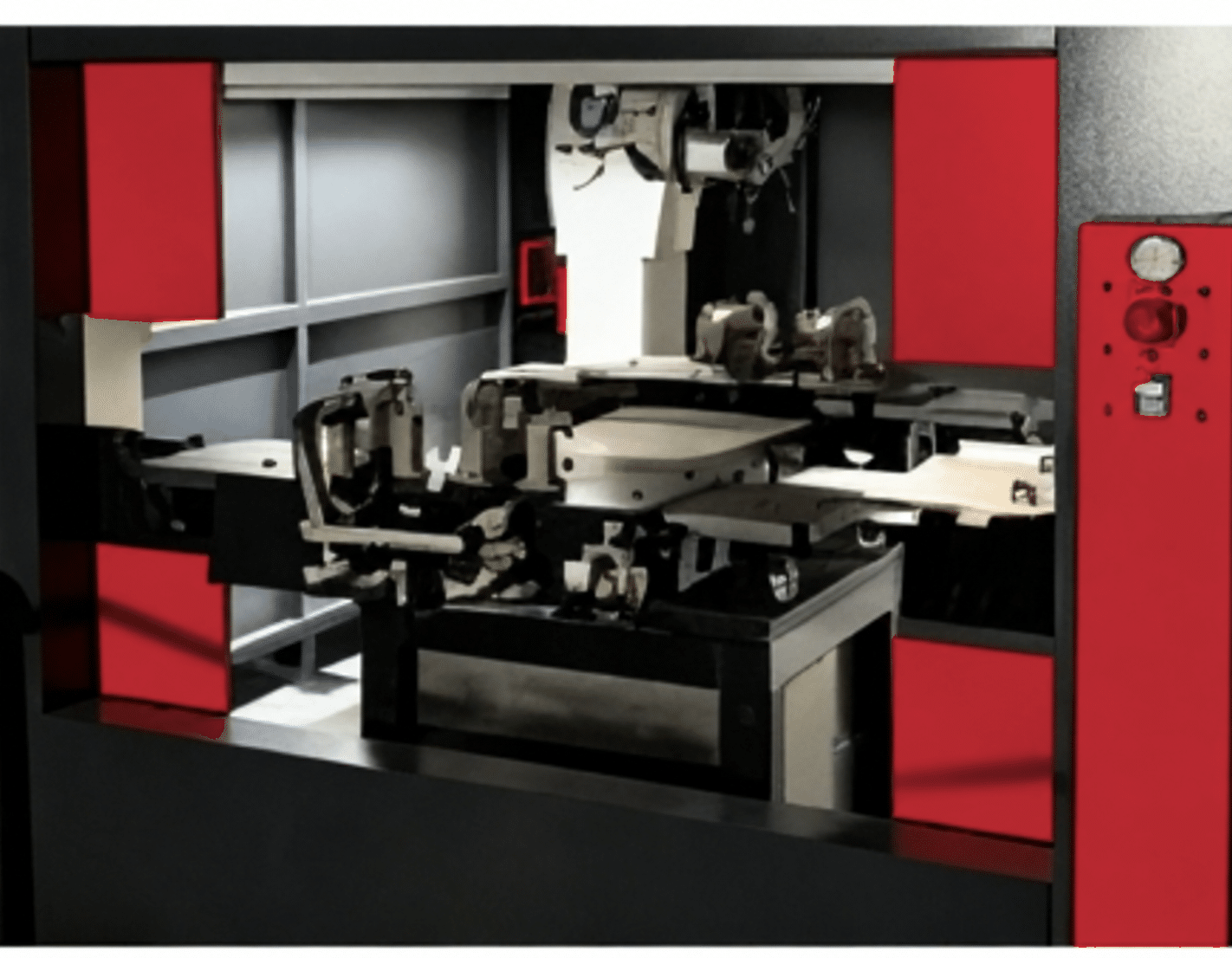
Rotary worktable access
The internal catalog view shows the rotary table and the space available for part-specific fixture planning.
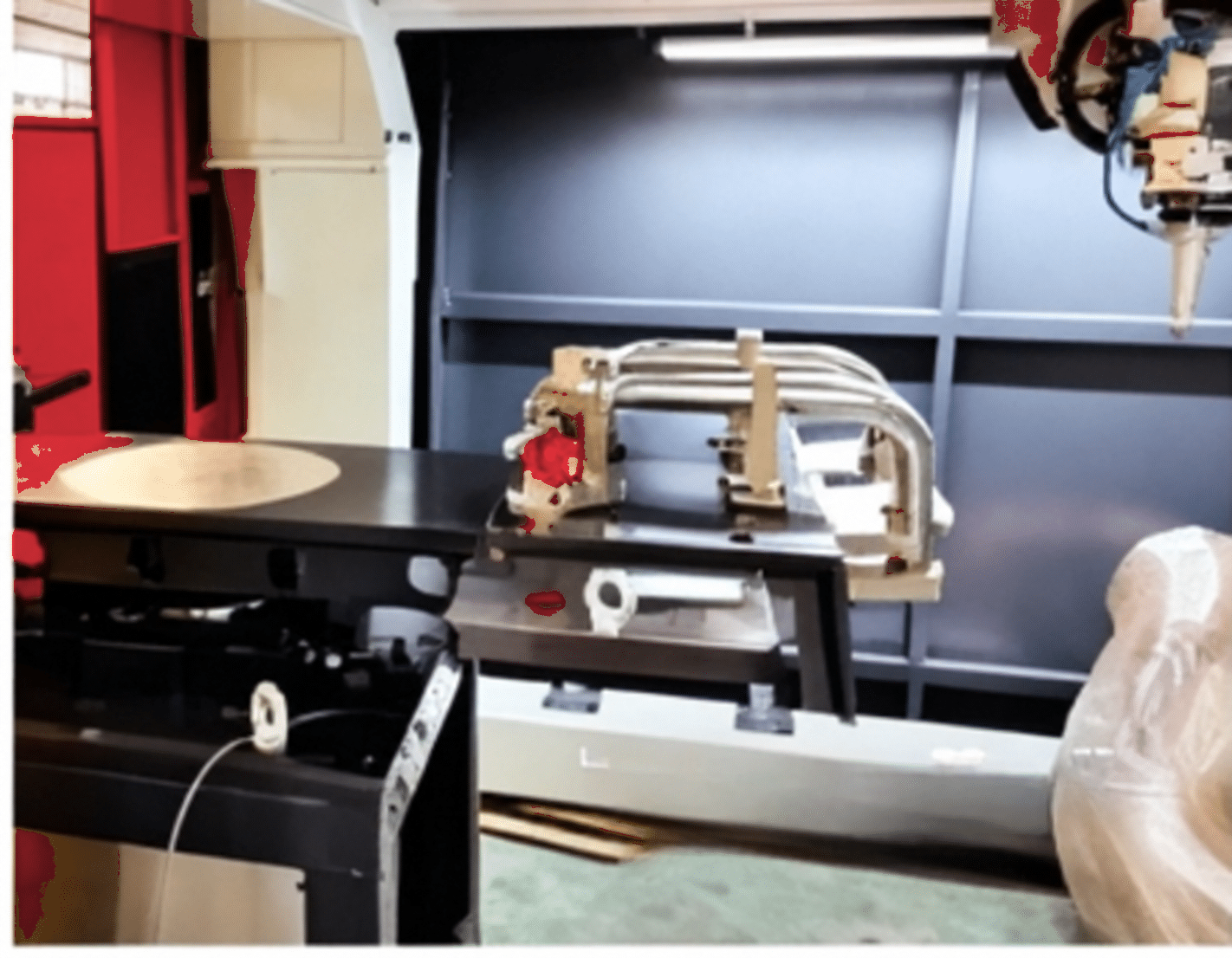
Fixture and cutting-head access
A catalog process view highlights how fixture geometry, clamps and head clearance must be evaluated together.
Planning a fixture or compact cell? Share the part geometry and production requirements ↗
04 / Technical specifications
One compact model.
A clear project baseline.
Use the catalog figures as the machine-selection baseline, then confirm the usable envelope and final laser configuration for the actual part.
| Parameter | ZGF1515DAI-30Compact 3D Five-Axis |
|---|---|
| MOTION & TRAVEL | |
| X / Y / Z travel | 1500 × 1500 × 700 mm |
| A-axis travel | ±135° |
| C-axis travel | N × 360° |
| U-axis floating travel | ±9 mm |
| SPEED & ACCURACY | |
| Max. speed, X / Y / Z axes | 100 m/min |
| Max. speed, A / C axes | 540°/s |
| X / Y / Z-axis machining accuracy¹ | ±0.05 mm |
| A / C-axis machining accuracy¹ | 0.015° |
| X / Y / Z repeat positioning accuracy | ±0.03 mm |
| A / C repeat positioning accuracy | 0.01° |
| LASER | |
| Laser power range | 3000–6000 W |
05 / Project evaluation
Start with the part.
Define the production solution.
A practical evaluation sequence helps turn a machine specification into a clear project scope.
Part review
Provide a drawing or 3D model, material grade, thickness, cutting features and output requirements.
Envelope & fixture review
Check the complete part, fixture and cutting-head envelope through every required orientation.
Sample validation
Agree on trial-cutting conditions and evaluate edge quality, feature geometry and the proposed cycle.
Project definition
Confirm laser power, worktable and fixture scope, utilities, software and acceptance criteria.
06 / Common questions
Before you specify
your Compact 3D Five-Axis.
The right configuration starts with clear part requirements and an agreed validation process.
When should I choose the Compact machine instead of S-Auto?
Choose the Compact platform when a smaller enclosed footprint, flexible project configuration and mixed-batch work are priorities. Choose between platforms only after checking the complete part-and-fixture envelope, production method, handling and required automation.
What fits inside the 1500 × 1500 × 700 mm travel?
Those figures describe X/Y/Z axis travel, not a guaranteed part size. The usable envelope changes with the workpiece, clamps, rotary-table orientation and cutting-head clearance. Supply the 3D part and fixture concept for a full reach review.
Does the machine include the rotary worktable shown?
The catalog photos show a rotary worktable and the brochure describes flexible table configurations. Confirm the exact worktable, fixture interface, load conditions and supplied accessories in the quotation.
Which laser power should I select?
The catalog lists a 3000–6000 W laser-power range. The appropriate configuration depends on material, thickness, geometry, assist gas and production targets. A sample cutting evaluation provides a stronger basis than power alone.
Does ±0.05 mm mean every finished part meets that tolerance?
No. The catalog lists ±0.05 mm as an X/Y/Z-axis machining accuracy figure. Finished-part results also depend on forming variation, datum selection, fixturing, programming and the cutting process. Agree on a part-level acceptance method for your project.
Are fixtures and offline software included?
The brochure does not define a complete commercial supply scope. Confirm workholding, software licensing, postprocessors, collision-checking functions and other accessories in the quotation and technical agreement.
What should I send for a project review?
Provide a 3D model or drawing, material grade and thickness, part dimensions, required holes and contours, quality targets, output per shift and loading preferences. Include fixture or datum information if already available. You can first describe the project through the form below.
07 / Tell us about your part
Turn your part drawing
into a cutting plan.
Describe your component and production goals. ZG Laser can review the application and discuss a suitable Compact 3D Five-Axis configuration.
- Material grade and wall thickness
- 3D geometry and required cutting features
- Target tolerance and output per shift
- Fixture, handling and automation preferences
Prefer to contact the team directly?
Visit our Contact page ↗
Request a project review
Start with the essentials. Fields marked * are required.
For drawings or larger files, describe what you have available and ask the team for the appropriate submission method.