Traditional coating removal techniques, such as sandblasting, grinding, and chemical stripping, are not only tedious and time-consuming but also pose significant risks to the base materials and the surrounding environment. For instance, sandblasting—especially with quartz sand containing more than 80% free silica—can generate harmful dust that causes silicosis in workers and leaves micro-abrasions on the substrate, reducing its fatigue life and service durability. Chemical stripping, on the other hand, involves toxic solvents that produce hazardous waste, requiring costly disposal and violating increasingly strict environmental regulations. In stark contrast, laser coating removal has emerged as a cutting-edge alternative, leveraging the latest technological advancements to safely remove coatings without damaging the substrate. Moreover, as verified by 2025 industry data, the laser cleaning process is a one-step operation: no additional cleaning, baking, or post-processing is needed, and the cleaned surface meets the strictest standards for subsequent processes such as bonding, painting, or non-destructive testing immediately upon completion.
How Laser Coating Removal Works
Our laser coating removal solutions utilize state-of-the-art fiber laser technology to precisely remove paint, rust, oxides, and other harmful coatings from targeted areas of vehicles, industrial components, and equipment. Powered by the latest advancements in laser source technology—including fiber lasers with electro-optical conversion efficiency increased to 45% and quasi-continuous wave (QCW) lasers that reduce energy consumption by 60%—we offer low (20W-100W), medium (100W-500W), and high (500W+) power systems tailored to diverse needs. These systems are ideal for applications requiring small localized cleaning, such as retrofitting corrosion control, component maintenance, or pre-welding surface preparation.
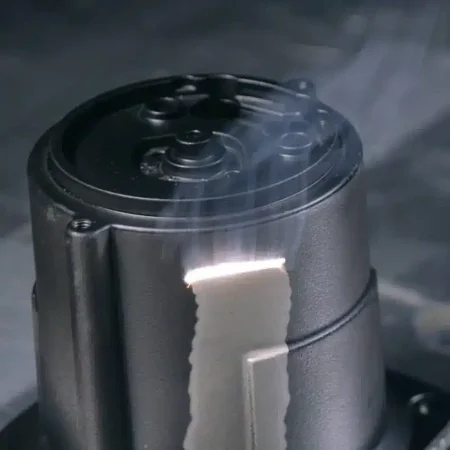
Whether the target area is a few inches (for precision electronic components) or a few feet (for large industrial machinery), our precision laser cleaning solutions excel at handling unique geometries and three-dimensional shapes—from complex aerospace parts to curved automotive components. Equipped with lightweight handheld optical instruments (now as light as 4.5kg, down from 15kg in previous generations) and AI-driven intelligent control systems, the cleaning and cleanup process is completed in a single step. The core principle relies on laser ablation: high-energy pulsed laser beams are absorbed by the coating (but not the substrate), causing instantaneous vaporization or thermal expansion of the coating. This creates a plasma shock wave that peels off the coating, exposing the bare metal without altering the substrate’s surface roughness, structural integrity, or fatigue life. Notably, our systems integrate real-time parameter optimization based on deep learning, automatically adjusting pulse width, frequency, and energy density according to the surface type—reducing scrap rates from 5% to 0.3% in precision applications such as relay contact cleaning.
With years of experience spanning aerospace, automotive manufacturing, new energy, and rail transit industries, we have provided customized laser cleaning solutions to enterprises worldwide. By ensuring precise, non-destructive coating removal, we prepare products for the next critical step—whether it’s bonding, further cleaning, surface treatment, or repainting—while minimizing production downtime and environmental impact. As of 2025, our solutions have been adopted by major manufacturers, including Tesla’s Shanghai factory, which has integrated laser cleaning with visual inspection into an integrated workstation for seamless production line integration.
Benefits of Laser Coating Removal
Driven by technological breakthroughs and tightening global environmental and safety standards, laser coating removal has become the preferred choice for modern manufacturing. Its core benefits, supported by the latest 2025-2026 industry data and standards, include:
- No Reduction in Equipment Life Cycle and Fatigue Life: Unlike sandblasting, which creates micro-cracks and weakens the substrate, laser cleaning’s non-contact, low-heat process preserves the base material’s mechanical properties. This is particularly critical for high-value components such as aerospace engine blades, where laser cleaning maintains a porosity of less than 0.2%—a standard that traditional dry ice blasting cannot meet (with a 15% rework rate).
- Unparalleled Cleaning Quality: Achieves micron-level precision (±2μm for 5G filter silver paste removal, superior to chemical etching’s ±10μm) and consistent surface finish, meeting the latest ISO 8501-3:2024 laser cleaning acceptance standards. The cleaned surface is free of residues, ensuring optimal adhesion for subsequent processes.
- Significant Time Savings: Laser cleaning is 3-10 times more efficient than traditional abrasives, chemicals, and media blasting. High-power laser systems (500W+) can clean 10-20 square meters per hour, while medium-power systems (100W-500W) handle 2-10 square meters per hour—reducing cleaning time for high-speed rail bogies by 67% (from 2 hours to 40 minutes per unit).
- Enhanced Worker Safety and Comfort: Eliminates exposure to toxic chemicals, harmful dust, and high-noise equipment. In line with the upcoming GB 7691-2025 “General Safety Management Rules for Coating Operations” (effective May 1, 2026), laser cleaning avoids the 6 types of prohibited processes (including open flame paint removal and benzene-based stripping) that pose severe health risks to workers. Integrated fume extraction devices further ensure a safe working environment by capturing 99% of harmful fumes and particles.
- Substantial Cost Reduction: Over the past decade, laser cleaning’s comprehensive cost has dropped by 50%—from 12-15 yuan per square meter in 2018 to 5.1 yuan per square meter in 2025 (projected), significantly lower than chemical stripping (8.8 yuan/m²) and sandblasting (7.2 yuan/m²). Long-term savings stem from zero consumables (no sand, chemicals, or solvents), extended equipment maintenance cycles (up to 8,000 hours), and reduced rework and waste disposal costs. For a 10GWh new energy battery production line, laser cleaning saves 14 million yuan annually compared to plasma cleaning.
- Environmentally Friendly: As a dry, non-toxic process, it produces no hazardous waste, wastewater, or air pollutants—aligning with global sustainability goals and EU Best Available Technology (BAT) standards for surface treatment. It reduces carbon emissions by eliminating the energy consumption associated with chemical solvent production and waste treatment, making it a key component of green manufacturing strategies.
Effective Removal of Hazardous Coating
Cleaning coatings containing hazardous materials such as lead, asbestos, or heavy metals is a complex and high-risk task. Traditional methods require extensive protective measures, specialized enclosures, and costly hazardous waste disposal—all of which increase operational time and costs. For example, sandblasting hazardous coatings generates toxic dust that requires sophisticated shielding to prevent worker exposure, while chemical stripping produces mixed hazardous waste that demands expensive treatment before disposal.
Laser cleaning offers a safe, efficient, and compliant solution for removing hazardous coatings from targeted areas of your facility. Our integrated fume extraction devices capture 100% of hazardous particles and fumes during the cleaning process, eliminating the need for cumbersome enclosures, sandblasting debris cleanup, and mixed hazardous waste disposal. This not only reduces operational complexity but also ensures compliance with strict environmental regulations, including the EU’s hazardous waste management directives and China’s GB 7691-2025 standard. Notably, in nuclear facility decommissioning, laser decontamination reduces radioactive waste by 90%—a technology already adopted by France’s EDF utility company.
Deposited Coating Removal
Laser cleaning is the most effective, safe, and environmentally friendly method of removing PVD, CVD, and MOCVD coatings from chambers and components. As coating processes become more common in all industries, Chutian Laser has demonstrated that solutions exist for these common and uncommon coatings that need to be cleaned. During the removal process, the cleaning process will capture all of the coatings to keep the air pure – meaning no additional danger to your operators.
ZG Laser’s specialized solutions are designed to handle both common and uncommon deposited coatings, leveraging multi-wavelength laser technology (1064nm+532nm) to ensure complete removal without damaging the underlying substrate—whether metallic or non-metallic. During the removal process, our systems capture all coating residues, maintaining air purity and eliminating additional risks to operators. Unlike blasting, which is cumbersome and damaging to delicate chambers, laser cleaning is a non-contact process that preserves the integrity of high-value equipment. Our team of experts will help you select the optimal laser system—from handheld units for small-scale maintenance to automated systems for high-volume production—based on your specific coating type and application needs. Additionally, the latest ultra-fast lasers (picosecond and femtosecond) offer “cold cleaning” capabilities for thermosensitive materials, further expanding the scope of deposited coating removal applications.
Industrial Coating Removal
Removing industrial coatings—such as those used in heavy machinery, ships, bridges, and manufacturing equipment—can be difficult, dangerous, and costly for operators and the environment. As global manufacturing shifts toward intelligence and efficiency, choosing the right cleaning technique is critical to avoiding production bottlenecks. Laser cleaning addresses the key pain points of traditional methods, offering fewer operational challenges than sandblasting or chemical stripping, while being safer and more environmentally friendly.
In industries where efficiency is paramount, even small process gaps can lead to significant output losses. Traditional cleaning techniques require extensive setup and teardown, causing costly production downtime. Laser cleaning, by contrast, requires minimal setup and can be seamlessly integrated into existing production processes—including automated periodic cleaning for continuous manufacturing lines. For example, CRRC Qingdao Sifang uses mobile laser cleaning vehicles to streamline high-speed rail bogie maintenance, improving efficiency by 300%. Moreover, laser cleaning can be fully automated with robotic systems, as demonstrated by TRUMPF’s integrated laser cleaning packages for industrial batch production.
In summary, laser coating removal (also widely referred to as laser cleaning) is an advanced surface treatment technology that excels in protecting the substrate while efficiently removing various coatings, including hazardous coatings and deposited coatings; its core advantages of high efficiency and being environmentally friendly make it the first choice for modern industrial applications, effectively addressing the pain points of traditional coating removal methods and providing reliable support for industries such as aerospace, automotive manufacturing, and new energy.