
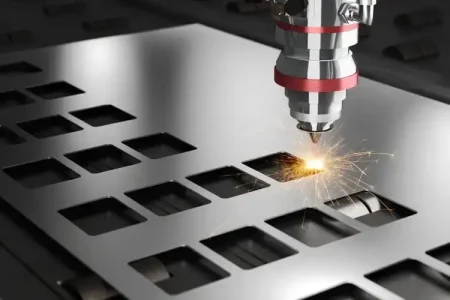
Laser cutting stands as the cornerstone of modern industrial fabrication, merging high-performance fiber laser technology, adaptive AI intelligence, and new energy manufacturing demands into a single, transformative processing solution. Unlike outdated cutting methods, it delivers unmatched precision, speed, and sustainability—redefining efficiency across automotive, aerospace, electronics, and renewable energy sectors.
What Is Laser Cutting? – Working Principles, Advanced Types & 2026 Applications
Laser cutting is a non-contact, subtractive manufacturing process that uses a highly focused, coherent laser beam to vaporize, melt, or ablate materials with micron-level accuracy.
As one of the most widely adopted industrial processing technologies in modern manufacturing, it combines high energy density, precise beam control, and digital programmability to achieve clean, consistent cuts without mechanical force or tool wear. Controlled by CNC (Computer Numerical Control) systems, often paired with intelligent CAD/CAM software, it eliminates mechanical stress and residual deformation.
This makes it ideal for delicate metals, composites, semiconductors, and heat-sensitive materials used in aerospace, new energy, electronics, and medical devices. Today’s systems integrate real-time monitoring, automatic focus adjustment, and AI-driven adaptive control, far surpassing the capabilities of traditional CO₂ and Nd‑YAG setups in efficiency, stability, and application range.
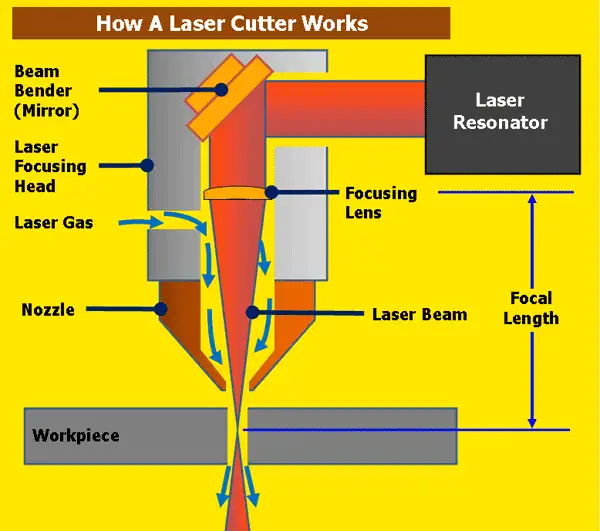
How Does Modern Laser Cutting Work?
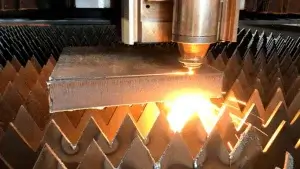
At its core, laser cutting relies on amplified coherent light generated within a resonant cavity—now dominated by fiber laser sources for superior efficiency, stability, and beam quality. The laser beam is precisely focused to an extremely small diameter, often as fine as 0.1mm, concentrating intense energy onto a tiny spot to instantly melt, vaporize, or ablate the target material.
High-pressure assist gases, such as oxygen, nitrogen, or compressed air (especially cost-effective air cutting in 20kW+ high-power systems), then blow away the molten or vaporized material, leaving sharp, smooth, burr-free edges with exceptional surface quality.
The 2026 revolution lies in AI intelligence: machine learning algorithms analyze material properties, thickness, surface conditions, and even real-time feedback during the cutting process, automatically calibrating laser power, cutting speed, focus position, and gas pressure to achieve optimal results. This drastically reduces manual setup time, minimizes human error, cuts material scrap by up to 15%, and boosts first-pass yield by more than 7%.
Unlike older, conventional systems, modern fiber laser cutters also support ultrafast pulses such as picosecond and femtosecond lasers for “cold cutting,” which significantly reduces heat-affected zones (HAZ) and prevents thermal deformation, discoloration, or internal stress—making them perfect for sensitive substrates like copper, aluminum, silicon wafers, and thin foils widely used in new energy, electronics, and medical devices.
Advanced Types of Laser Cutting (2026 Industry Standards)
1. Fiber Laser Cutting (Dominant Technology)
Fiber laser systems are the undisputed industry gold standard for modern manufacturing, delivering up to 30% higher energy efficiency than traditional CO₂ lasers and exceptional cutting speeds of up to 120m/min for thin metal sheets.
Built with ytterbium or erbium-doped active fibers, they produce extremely stable, high-brightness laser beams with exceptional consistency and low maintenance requirements. This makes them perfectly suited for precision processing of new energy components such as EV battery tabs, motor laminations, and photovoltaic silicon wafers, where accuracy and zero thermal damage are critical.
Today’s advanced 40kW+ ultra-high-power fiber laser models can easily cut through up to 230mm thick steel using cost-efficient air assist, gradually replacing plasma cutting and oxy-fuel cutting in heavy industry, shipbuilding, and large-scale steel fabrication.
2. Ultrafast Pulsed Lasers (Precision Leader)
Ultrafast picosecond and femtosecond lasers represent the highest level of precision in modern laser processing, enabling true cold ablation that vaporizes target materials almost instantaneously before heat can transfer to surrounding areas.
This revolutionary technology minimizes thermal impact to an extremely low level, delivering a heat-affected zone (HAZ) of less than 1μm, far superior to conventional laser methods. It eliminates thermal stress, warping, discoloration, and micro-cracks entirely, making it irreplaceable for high-end applications such as semiconductor wafers, medical implants, flexible printed circuits, thin-film electronics, and miniature components where zero distortion and perfect edge quality are mandatory.
With exceptional stability and consistency, ultrafast lasers have become the core technology for cutting-edge manufacturing in micro-processing, optoelectronics, and precision engineering.
3. AI-Enhanced Multi-Beam Systems
AI-enhanced multi-beam laser systems represent the next generation of high-efficiency manufacturing, equipped with dual or quad laser heads that work in full synchronization under the control of advanced AI intelligence.
This revolutionary configuration allows simultaneous cutting of multiple components or parallel processing of large-format workpieces, boosting overall production throughput by up to 280% compared with single-beam machines—especially critical for high-volume demand in the automotive and aerospace industries.
Equipped with real-time monitoring and automatic deviation correction, these smart systems can instantly detect and adapt to material deformation, thermal drift, or surface irregularities during operation, ensuring consistent precision, perfect alignment, and stable cutting quality at all times. By combining high-speed multi-beam processing with intelligent adaptive control, this technology effectively breaks through traditional production bottlenecks and becomes a key driver for smart, flexible, and high-intensity manufacturing.
4. Specialized Wavelength Lasers (New Energy Breakthrough)
Specialized wavelength lasers represent a true breakthrough for the new energy sector, with blue and green diode lasers (around 450nm) solving one of the longest-standing challenges in laser processing: efficiently cutting highly reflective metals like copper and aluminum.
Unlike traditional infrared lasers, which suffer from low absorption and easy reflection, these short-wavelength lasers increase material absorption rates by up to 10 times, enabling stable, spatter-free, high-quality cuts without discoloration or thermal damage. This technology is now indispensable for EV battery manufacturing, powering the precision processing of battery foils, busbars, copper connectors, and cooling plates.
By delivering cleaner cuts, higher consistency, and improved production yield, specialized wavelength lasers have become a core enabling technology for the global new energy and electric vehicle industry.
2026 Key Applications (Industry Hotspots)
New Energy Manufacturing (Fastest-Growing Segment)
As the fastest-growing and most transformative application area, new energy manufacturing relies heavily on advanced laser cutting technology. Laser cutting is now indispensable for producing key components in electric vehicles, energy storage systems, and solar power generation, delivering clean, precise processing of battery tabs, busbars, cooling plates, motor laminations, and soft connecting sheets with zero thermal damage, deformation, or burrs.
Modern fiber laser systems integrated with AI intelligence enable real-time parameter optimization specifically for large-format 4680 battery cells and next-generation power batteries, boosting production speed by up to 30% while cutting material scrap rates by nearly 20%. With its high efficiency, stability, and intelligence, laser cutting has become a core enabler for mass production, cost reduction, and quality improvement in the global new energy industry.
Automotive & Aerospace
The automotive and aerospace sectors represent two of the most demanding and high-value fields for advanced laser cutting solutions. Fiber laser cutters excel at producing lightweight, high-strength structural components for electric vehicles, commercial aircraft, and aerospace systems, ranging from body-in-white parts and chassis components to engine parts, turbine blades, and high‑temperature alloy structures.
With non-contact processing and minimal thermal distortion, laser cutting ensures consistent quality and dimensional accuracy even for advanced high-strength steels (AHSS) and lightweight alloys. AI intelligence enables real-time adaptive cutting of hydroformed parts, curved surfaces, and complex 3D geometries, effectively replacing traditional stamping, milling, and drilling processes. This not only shortens production cycles and reduces tooling costs but also supports the industry’s shift toward lightweight design, higher efficiency, and greater flexibility.
Semiconductor & Electronics
The semiconductor and electronics industry demands extreme precision and zero thermal damage, making ultrafast laser cutting an irreplaceable process. Modern ultrafast laser cutting systems fabricate microchips, flexible PCBs, display panels, and semiconductor wafers with an astonishing precision of ±0.5μm, supporting the relentless trend toward miniaturization, higher integration, and thinner designs in consumer electronics, 5G communications, and smart devices.
With minimal heat-affected zones and non-contact processing, lasers avoid mechanical stress, contamination, and material deformation—critical for fragile and high-value electronic components. This level of accuracy enables manufacturers to produce smaller, more powerful, and more reliable devices while maintaining high yield and consistent quality in mass production.
Medical Devices
The medical device sector demands the highest standards of precision, biocompatibility, and cleanliness, and cold-cutting laser cutting systems rise perfectly to these requirements. These advanced systems deliver non-contact, heat-free processing to manufacture sterile, burr-free, and ultra-smooth medical implants, including vascular stents, orthopedic bone hinges, surgical clips, and minimally invasive surgical tools.
By minimizing thermal impact and eliminating mechanical stress, laser cutting ensures structural integrity and biocompatibility for materials like nitinol, titanium, and medical-grade stainless steel. The process fully complies with strict international medical industry regulations and cleanroom production requirements, making it an essential technology for producing reliable, high-performance medical devices that improve patient outcomes.
Conclusion
Laser cutting has evolved from a niche tool to the backbone of Industry 4.0, driven by fiber laser innovation, AI intelligence integration, and surging new energy demand. It delivers unmatched precision, speed, and sustainability—solving the inefficiencies of traditional methods and empowering manufacturers to stay competitive in 2026 and beyond.
By combining high-power beam stability, real-time intelligent control, and green production principles, it drastically reduces material waste, lowers operational costs, shortens production cycles, and eliminates thermal deformation or mechanical damage that plagues conventional fabrication. Supported by IoT connectivity and predictive maintenance, modern laser cutting systems operate with greater autonomy, consistency, and uptime, perfectly matching the flexible, high-mix, small-batch demands of today’s smart factories.
As technology advances, laser cutting will continue to push the boundaries of what’s possible in manufacturing, unlocking new potentials in electric vehicle production, battery manufacturing, aerospace components, semiconductor processing, and high-end metal fabrication, and firmly establishing itself as an irreplaceable core technology for global industrial upgrading.






1 thought on “What is Laser Cutting Working Types and Application”
It was informative when you talked about how laser-cutting machines can be used to reproduce automotive parts with speed. With that in mind, I would think that these machines would be cutting tough metals like steel. I would imagine that the laser would need to be able to create high temperatures to be able to cut through steel.
Comments are closed.