Ultimate: 5 Game-Changing Steps to Master Laser Cleaning
Acilly Xiong
on
Table of Contents
Laser cleaning stands as the cornerstone of green manufacturing, empowered by advanced fiber laser sources and real-time AI adaptive control, delivering an eco-friendly process for removing rust, paint, oxides and other contaminants from metal surfaces. As high-efficiency surface treatment becomes non-negotiable in 2026, this smart solution dominates modern industrial applications across automotive, aerospace, new energy and heritage restoration.
Traditional industrial cleaning methods remain painfully cumbersome, inefficient, and increasingly unsustainable in today’s fast‑moving manufacturing landscape. Rust removal wastes countless hours of manual labor, dragging down productivity and increasing operational fatigue. Oxide stripping frequently depends on harsh, toxic chemicals and hazardous solvents that are not only substrate‑specific but also pose severe health risks to workers and long-term damage to the environment. Meanwhile, sandblasting and abrasive blasting for paint removal often leave irreversible scratches, deformities, and structural weaknesses on the base metal, compromising material integrity and leading to costly rejections or premature failures.
These outdated, labor-intensive workflows not only drive up operational costs through consumables, waste disposal, and maintenance but also directly violate increasingly strict environmental, health, and safety (EHS) regulations worldwide. They create bottlenecks in production lines, reduce overall throughput, limit automation potential, and put manufacturers at a competitive disadvantage in an era defined by efficiency, sustainability, and digital transformation.
Laser cleaning solves these pain points at scale: it is a cost-effective, future-proof solution that slashes cleaning time, cuts maintenance overhead, and aligns with global green manufacturing mandates. If you still doubt the transformative power of this laser technology, read on for the 5 critical steps that define modern, high-performance contaminant and coating removal.
1. All Materials Have an Ablation Threshold
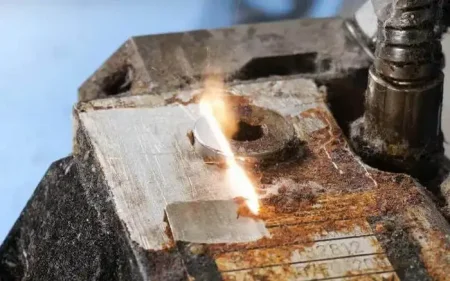
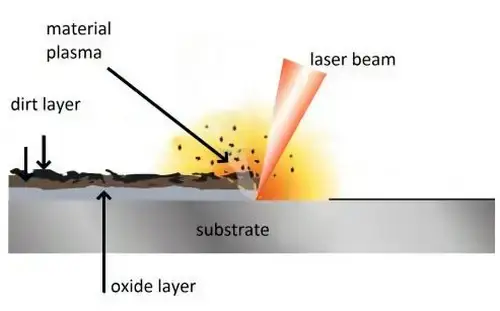
Laser ablation lies at the heart of every laser cleaning application, serving as the fundamental physical principle that powers this advanced surface treatment technology. By delivering a highly focused, high-energy laser beam onto the target surface, the system achieves precise layer-by-layer removal without mechanical contact or chemical agents. Take steel descaling as a typical example: when the laser beam interacts with surface dust, rust, or oxide layers, the intense localized energy rapidly breaks molecular bonds, causing the contaminants to instantly vaporize or be explosively ejected from the substrate. In simple terms, the laser selectively vaporizes only the unwanted layer, leaving the underlying base material completely untouched and structurally intact. This non-contact, non-damaging mechanism is what distinguishes laser cleaning from all traditional abrasive and chemical methods.
Every material carries unique properties and molecular structures, meaning each has its distinct ablation threshold. For effective removal, the fiber laser must deliver energy precisely above this threshold for the contaminant—never exceeding the substrate’s threshold to prevent damage.
Laser Ablation
2. Removing Material in a Highly Selective Manner
Think of two walls of different heights: throw a ball with just enough energy to clear the first wall but not the second, and the result will repeat consistently, no matter how many times you try. The ball will always cross the first barrier but never penetrate the second. This simple analogy perfectly illustrates the core principle of selective cleaning in laser technology. By precisely calibrating laser energy to match the ablation threshold of the contaminant layer, the system achieves unparalleled selectivity, ensuring that only the unwanted coating is removed while the substrate remains completely unharmed. This level of precision is simply unattainable with traditional cleaning methods, making laser cleaning a truly revolutionary solution for modern industrial applications.
Thanks to varying ablation thresholds, laser cleaning distinguishes layers with surgical precision. Rust, paint and oil have far lower thresholds than steel, aluminum and alloys. This gap lets operators vaporize contaminants completely, with zero risk of substrate damage—energy levels stay safely below the base material’s threshold.
3. AI Adaptive & Short Pulses Drive Ultra-Fast Removal
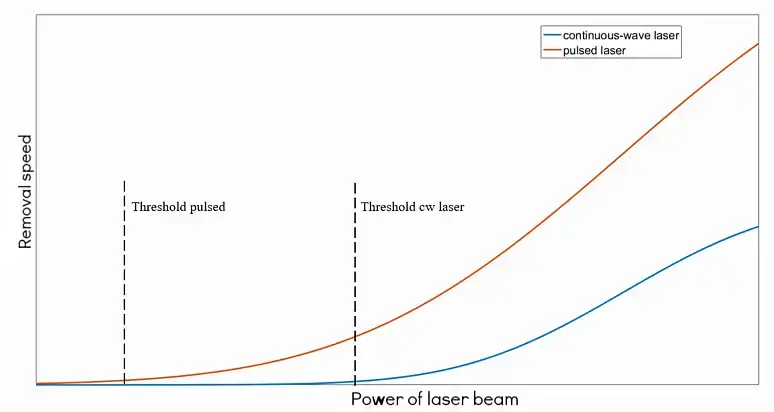
Modern laser cleaning pairs high-energy pulsed beams with AI adaptive algorithms, working like a precision hammer and chisel for industrial surfaces. A compact, powerful hammer reduces strikes and speeds up work; similarly, concentrated short pulses outperform continuous waves by leaps.
By packing energy into ultra-short bursts, fiber laser systems boost power density per unit area, accelerating removal while limiting heat-affected zones (HAZ). AI adaptive control fine-tunes pulse frequency and power in real time, optimizing speed for complex contours and varying contaminant thicknesses.
Removal Speed: Continuous vs. Pulsed Lasers
4. Zero Consumables & Full Eco-Compliance
A defining advantage of laser cleaning is its minimal operational footprint: no consumables, no chemicals, no solvents—just electricity and a robust fiber laser source. This eliminates hazardous waste disposal, lowers recurring costs, and protects workers from toxic exposure.
Compliant with international laser safety standards, these systems require no heavy PPE for nearby staff. A fume extraction system captures vaporized particles, keeping workshops clean and meeting the strictest green manufacturing regulations for 2026 and beyond.
5. Scalable Industrial Applications for 2026 and Beyond
Laser cleaning now powers mission-critical workflows: tire mold rubber removal, nuclear pipe decontamination, bridge paint stripping, and precision weld preparation. This non-contact technology fits nearly any industrial scenario, limited only by the ablation threshold difference between contaminant and substrate.
Top 2026 use cases include:
Pre-weld rust and contaminant removal with AI adaptive path planning
Post-weld oxide stripping for aluminum and stainless steel
Surface activation to maximize paint adhesion in new energy production
Selective oxide removal from high-value alloy ingots
Automated coating stripping on production lines for rework
Salvaging parts rejected for paint defects with zero damage
Beyond cleaning, laser ablation enables additive manufacturing surface prep, semiconductor micro-cleaning, and cultural relic restoration—solidifying its role as a multi-purpose industrial workhorse.
In Summary
In summary, laser cleaning transcends the limitations of conventional surface treatment by solving the most stubborn challenges in rust removal, paint stripping, oxide cleaning and contaminant elimination across industrial sectors. By seamlessly integrating high-performance fiber laser technology, intelligent AI adaptive control and forward-thinking green manufacturing standards into a single, highly efficient solution, it achieves unprecedented precision, safety and sustainability. Its unique selective ablation mechanism ensures zero damage to base materials while completely eliminating unwanted layers, drastically reducing operational costs, labor intensity and environmental risks. With unmatched speed, reliability and long-term cost efficiency, laser cleaning has evolved from an innovative alternative to an indispensable industrial tool, firmly establishing itself as the undisputed future of global surface treatment and intelligent manufacturing.
Programming a conventional flat-sheet laser cutter is relatively straightforward. The workpiece is flat. The cutting head normally remains perpendicular to...
A high-precision five-axis laser cutting machine does not automatically produce an accurate finished component. The machine can follow the programmed...
Hot-formed automotive parts combine complex three-dimensional geometry with high material strength. After forming and hardening, many components still require final...
Hi, I am the author of the website and also a laser equipment engineer, if you have any questions about industrial lasers, please contact me by clicking the link below